Markets, Momentum and the Sheep Spiral
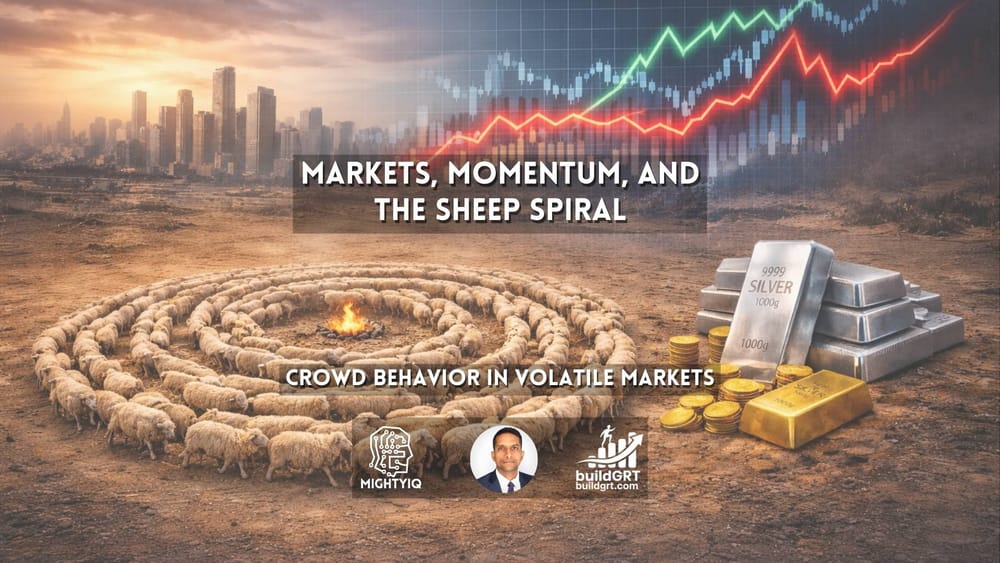
Recently, a video circulated online showing a group of sheep walking in circles around a fire. No one was forcing them. They kept moving simply because the others were doing the same. Hours passed. The circle continued. There was no clear reason - just repetition.
When markets turn volatile, it’s natural for governments, institutions, and investors to gravitate toward precious metals - especially silver and gold. That instinct dominated much of 2025. Even after the recent pullback, silver is still up more than 140% year to date, having started the year above $28 per ounce.
That context matters. Silver just recorded its worst day since 2021. After briefly topping $80/oz for the first time ever, futures fell 8.7%, settling near $70.46, before rebounding toward $75+. The move highlights just how volatile — and crowded — the trade had become.
For much of the year, precious metals felt like a one-way bet. Inflation fears, geopolitical tension, central-bank buying, and de-dollarization narratives pushed gold and silver from hedges into consensus. Hard assets weren’t just protection anymore - they became the default answer.
Importantly, silver’s rise wasn’t just about fear or safe-haven buying. It was also supported by real demand, especially from solar panels, data centers, and electric vehicles, where silver is a key material.
After big gains, markets often take a pause. When too many people are in the same trade, prices stop moving on stories and start moving on selling. This is the sheep-spiral in markets: people buy because others already have, which often leaves less room for quick gains.
Silver’s long-term outlook still looks strong, supported by growing industrial demand. But short-term momentum can fade when trades get crowded.
Key Highlights
Crowded trades unwind faster than narratives change: A sharp ~15% swing and the worst day since 2021 suggest traders were locking in gains and adjusting positions ahead of year-end, rather than reacting to a sudden change in fundamentals.
Real demand supports the long-term case, not short-term price: Solar, EVs, and data centers create steady demand, but futures and ETF selling move prices much faster than physical markets.
Short-term USD moves still matter - even as diversification continues: Crowded trades remain sensitive to dollar moves, while longer-term diversification by BRICS and other economies keeps the currency outlook in flux.
Retail enthusiasm often signals late-cycle behavior: When an asset becomes the obvious choice for buyers, professionals quietly rotate their gains.
The takeaway: Markets reward discipline over excitement. When volatility rises and trades get crowded, patience and risk control matter more than headlines.
This may be a healthy reset - or the start of a slower, range-bound phase. Either way, the edge comes from staying calm while others adjust.
♻️ Repost if this resonates: real edges come from cycle awareness, not following the crowd.
🌐 Building something new?
If you’re looking for a reliable hosting provider, I’d recommend DreamHost.
We’ve used it for our client websites for over a decade - it’s fast, secure, and built for creators who want peace of mind.
🔔 Stay Connected
If this reflection on navigating an algorithmic world - without losing depth resonated with you, let’s continue the dialogue.
👉 Subscribe to my newsletter, Beyond Growth Playbook, for insights on strategy, technology, and transformation: iamgrt.com
👉 Join the builders shaping what’s next. Real insights, zero noise. buildgrt.com - your ticket to global growth.