Data Security, Monopoly & Tokenization - Securing The Data Future
In its 2025 Customer Identity Trends Report, Okta highlighted a stark reality for Canada’s digital economy: 76 per cent of Canadians say they would stop doing business with a company after a data breach, and 36 per cent say they are very unlikely to ever return.
The deeper issue in Canada is not just trust - it is choice.
In essential sectors such as banking, healthcare, telecommunications, utilities, and government services, markets are highly concentrated and, in many cases, effectively monopolized. For most Canadians, meaningful alternatives simply do not exist.
As a result, customers often continue using a service not because trust has been restored, but because there is nowhere else to go. This forced dependency hides the true impact of a breach.
The damage does not disappear; it compounds quietly and later surfaces through regulatory scrutiny, long-term brand erosion, or sudden churn when real competition finally emerges.
In the recent past, the growing use of AI changed the dynamics even further. AI didn’t just increase data usage - it exploded it.
Trillions of tokens now move through prompts, logs, embeddings, APIs, and AI pipelines, pushing sensitive data far beyond core databases. That shift turned security from a background IT concern into a fundamental design problem.
As AI spreads sensitive data across environments encryption was never built for, tokenization offers a more resilient path.
By removing real data from most flows entirely, it reduces breach impact, simplifies compliance under GDPR, HIPAA, and PIPEDA, and scales with modern AI workloads.
What is Tokenization?
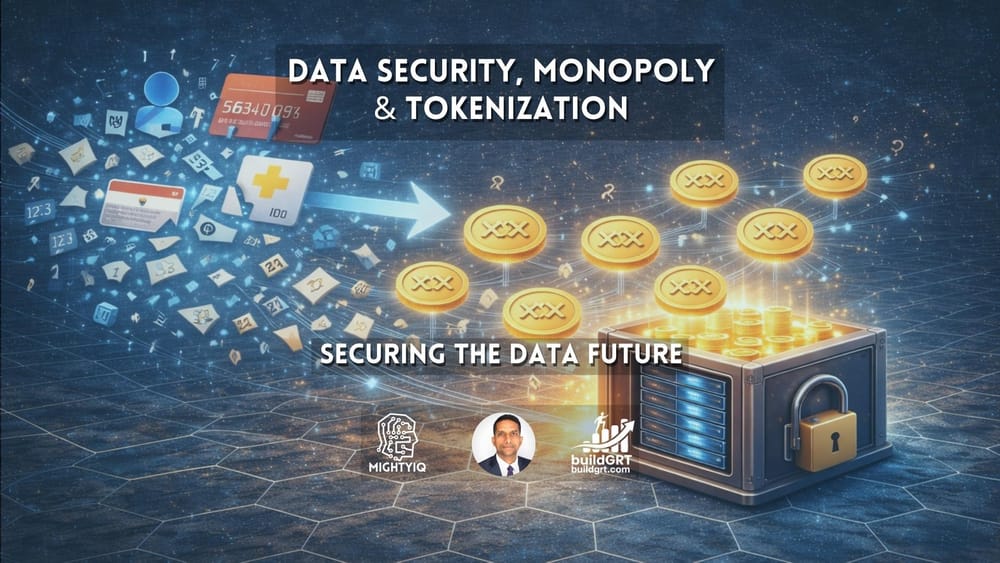
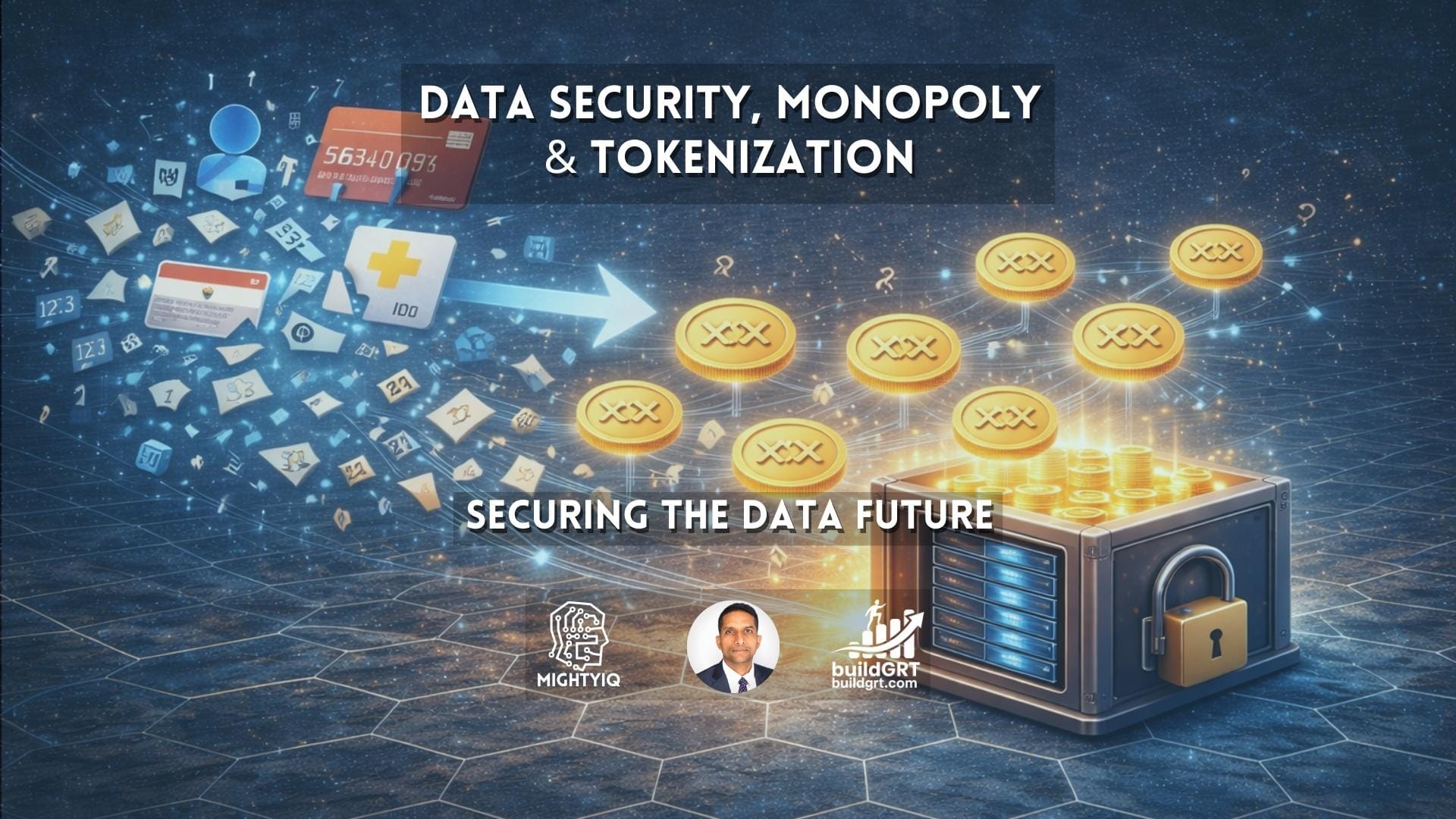
Tokenization is a security approach that replaces sensitive data—such as payment details, government IDs, or health records - with random, non-sensitive tokens that have no connection to the original values.
The real data is stored separately in a secure vault, allowing systems to operate on tokens while sharply reducing breach impact and compliance risk.
Key Highlights
At AI scale, security failures are inevitable. The following points explain why reducing where sensitive data exists is more effective than trying to perfectly control access across increasingly complex systems.
- Tokenization removes sensitive data from most systems, databases, and logs, reducing the attack surface.
- It ensures breaches expose tokens rather than usable data, limiting real-world damage.
- Prevents “harvest-now, decrypt-later” attacks since tokens cannot be decrypted.
- Reduces compliance scope under GDPR, HIPAA, and PIPEDA by minimizing data exposure.
- Scales effectively for AI- and API-driven architectures where data moves continuously.
The Key Takeaway
In an AI-first world, controlling who can access data is no longer enough. Systems are too distributed and data moves too freely. Tokenization protects the data itself, wherever it goes.
Security today isn’t about higher walls. It’s about having less to lose. No single approach is “the best” in all cases - but tokenization is often the strongest architectural choice when you want to minimize risk at AI scale.
♻️ Repost if this resonates: in the AI era, reducing data exposure matters more than trying to control every access point.
🌐 Building something new?
If you’re looking for a reliable hosting provider, I’d recommend DreamHost.
We’ve used it for our client websites for over a decade - it’s fast, secure, and built for creators who want peace of mind.
🔔 Stay Connected
If this reflection on navigating an algorithmic world - without losing depth resonated with you, let’s continue the dialogue.
👉 Subscribe to my newsletter, Beyond Growth Playbook, for insights on strategy, technology, and transformation: iamgrt.com
👉 Join the builders shaping what’s next. Real insights, zero noise. buildgrt.com - your ticket to global growth.