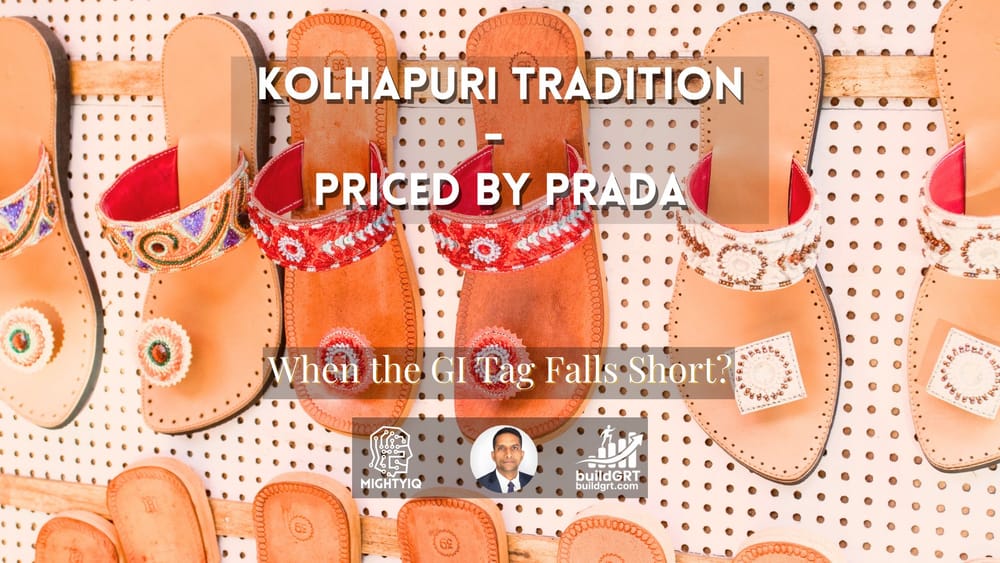
Kolhapuri Tradition - Priced by Prada
When the GI Tag Falls Short?
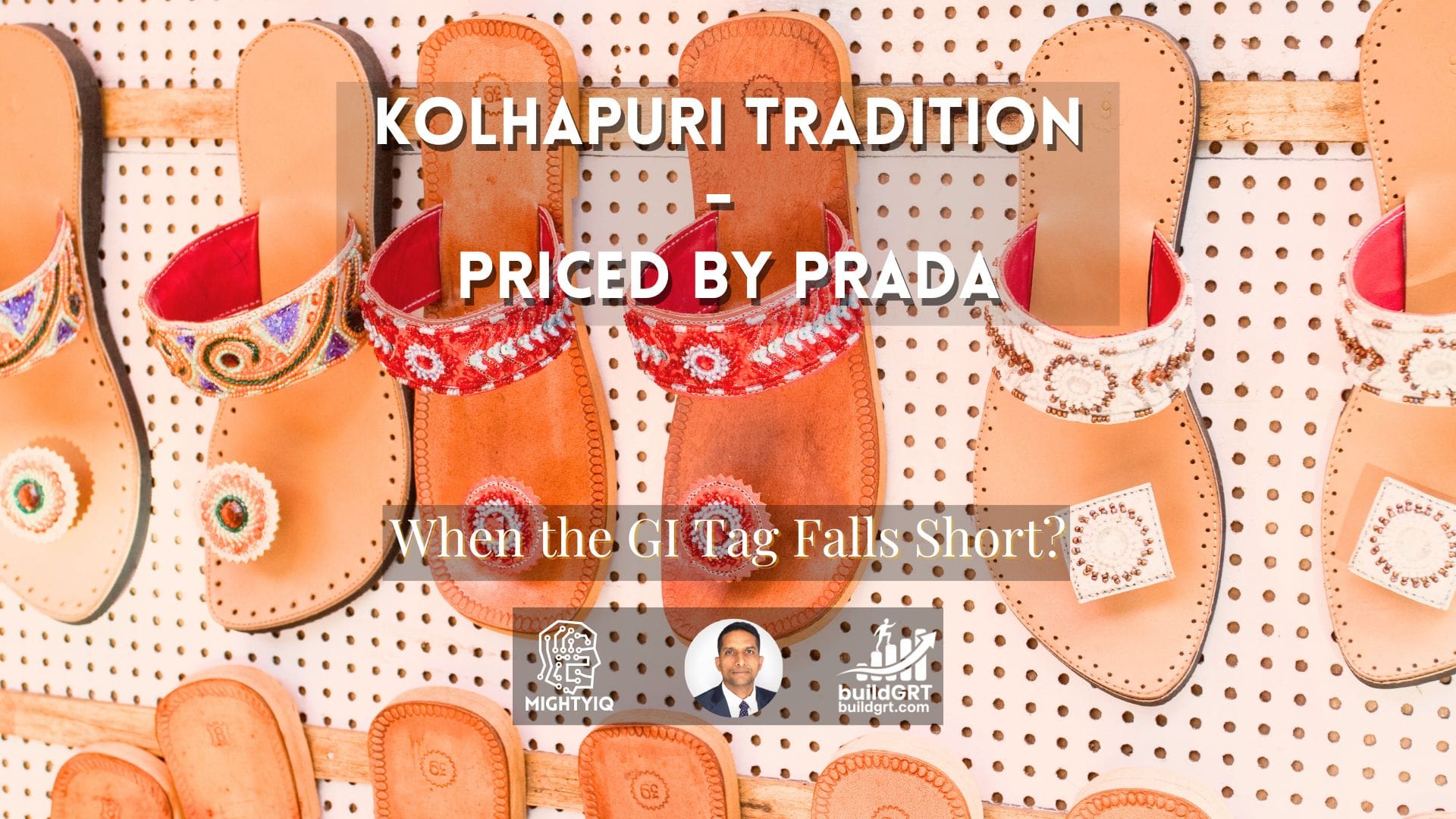
In June 2025, during Milan Men’s Fashion Week, Prada unveiled its Spring/Summer 2026 leather sandals. The design—woven leather, T-strap, toe loop—was instantly recognisable to millions of Indians: it mirrored the traditional Kolhapuri chappal, a handcrafted slipper with roots dating back to the 12th century in Maharashtra and Karnataka.
What followed was not just a fashion controversy—but a case study in global IP asymmetry, cultural capital extraction, and the limits of existing protections for traditional crafts.
Locally, Kolhapuris sell for $8–$18. Prada’s versions were priced between $800 and $1,400.
The backlash was swift.
Artisans, trade bodies—including the Maharashtra Chamber of Commerce—policymakers, and social media users accused the brand of cultural appropriation and uncredited profiteering. Consumers also questioned how a craft protected by a Geographical Indication (GI) tag since 2019—recognising its regional and cultural specificity—could still be replicated, rebranded, and monetised at scale elsewhere.
Prada responded through Lorenzo Bertelli, acknowledging Indian inspiration and announcing a corrective step: a “Prada Made in India – Inspired by Kolhapuri Chappals” line. Slated for February 2026, the collection will include 2,000 co-produced pairs, retailing at $930 (USD), made with government-linked artisan groups in Maharashtra and Karnataka, alongside artisan training in Italy and heritage recognition.
It was a rare climb-down by a luxury house—but the episode exposed a deeper problem.
The Real Issue: When IP Captures Value, Not Culture
The Kolhapuri - Prada episode is not uncommon. We see copying, imitation, and “inspiration” regularly - especially among large conglomerates. In technology, for example, companies like Apple and Samsung often release products with similar designs and functionality.
The difference is that in technology hardware, intellectual property is heavily patented, and companies are willing - and able - to challenge each other in court.
The problem arises when an established global brand like Prada draws from the work of a much smaller artisan community. In such cases, the issue goes beyond patents or formal IP enforcement. It becomes an ethical question of power, attribution, and value sharing - not just one of legality.
Today’s IP systems are designed for brands and companies, not for communities or long-standing traditions. The result is a structural imbalance:
- Communities create cultural value
- Brands secure global rights and visibility
- Control over pricing, storytelling, and margins shifts away from the makers
A global luxury house can legally build collections inspired by traditional crafts, register designs or brand narratives around them, and market the story globally -often without sharing meaningful control or value with the original artisans.
Over time, the craft becomes associated with the brand, not the place or the people who shaped it.
Why the GI Tag Wasn’t Enough
Kolhapuri chappals are protected by a Geographical Indication (GI) tag in India, but GI protection has limits:
- It is largely territorial - protection doesn’t automatically apply outside India
- It protects the name and reputation, not the visual design
- Copying the look without using the word “Kolhapuri” often remains legal
This gap allows brands to replicate the aesthetic, avoid the protected name, and still capture premium pricing and global recognition.
Which leads to the bigger question: If a GI tag can’t fully protect an 800-year-old craft at global scale, what does real protection for artisans actually look like?
The Takeaway
The Prada - Kolhapuri controversy wasn’t really about sandals.
It was about who gets to monetise culture in a global economy - and under whose rules.
Small artisan communities may not be able to stop visual echoing by powerful brands. But they can:
- Raise the cost of misrepresentation
- Build collective identity and provenance
- Force partnerships that share value, visibility, and respect
In a world where heritage is increasingly mined for premium branding, culture without control is just another raw material.
And that is the real lesson Kolhapuris taught the global fashion industry.
What do you think?
Are our IP and heritage protection frameworks keeping pace with how culture is commercialised globally - or are crafts reaching global runways faster than the systems meant to protect the people behind them?
♻️ Repost if you believe long-lasting cultural value isn’t preserved by visibility alone - but by clear rights, fair attribution, and protection mechanisms strong enough to scale globally.
🔭 What I Focus On
🧵 Culture, Craft & IP Economics
Practical analysis at the intersection of heritage, intellectual property, and global markets — helping founders, policymakers, and brands understand where current protection models fall short.
🌍 Market Intelligence Across Global Corridors
Insights shaped by work across India, North America, the Middle East, and emerging markets, translating cultural, regulatory, and trade shifts into clear strategic direction.
⚖️ Value Capture & Protection Frameworks
Frameworks that look beyond symbolism — examining how value, control, and recognition move across borders when tradition meets global scale.
🧩 How I Help
📊 Strategic Analysis & Advisory
Helping organisations, founders, and institutions make sense of complex intersections between culture, IP, trade, and monetisation.
🤝 Policy, Brand & Ecosystem Conversations
Supporting thoughtful dialogue between creators, brands, and stakeholders on attribution, protection, and long-term value sharing.
🌐 Cross-Border Perspective
Bringing a grounded, global lens to questions of growth, protection, and equity across international markets.
🌐 Building something new?
If you’re looking for a reliable hosting provider, I’d recommend DreamHost.
We’ve used it for our client websites for over a decade - it’s fast, secure, and built for creators who want peace of mind.
🔔 Stay Connected
If this perspective on building meaningful products - beyond hype and into fundamentals - resonated with you, let’s keep the conversation going.
👉 Subscribe to my newsletter, Beyond Growth Playbook, for insights on strategy, technology, and transformation: iamgrt.com
⚡Build with Confidence with GRT is a focused space (WhatsApp channel) for founders and professionals seeking clarity, momentum, and practical guidance. If you’re building something meaningful in 2026 - join the community of builders shaping what’s next. Real insights, zero noise. 👉 buildgrt.com - your ticket to global growth.